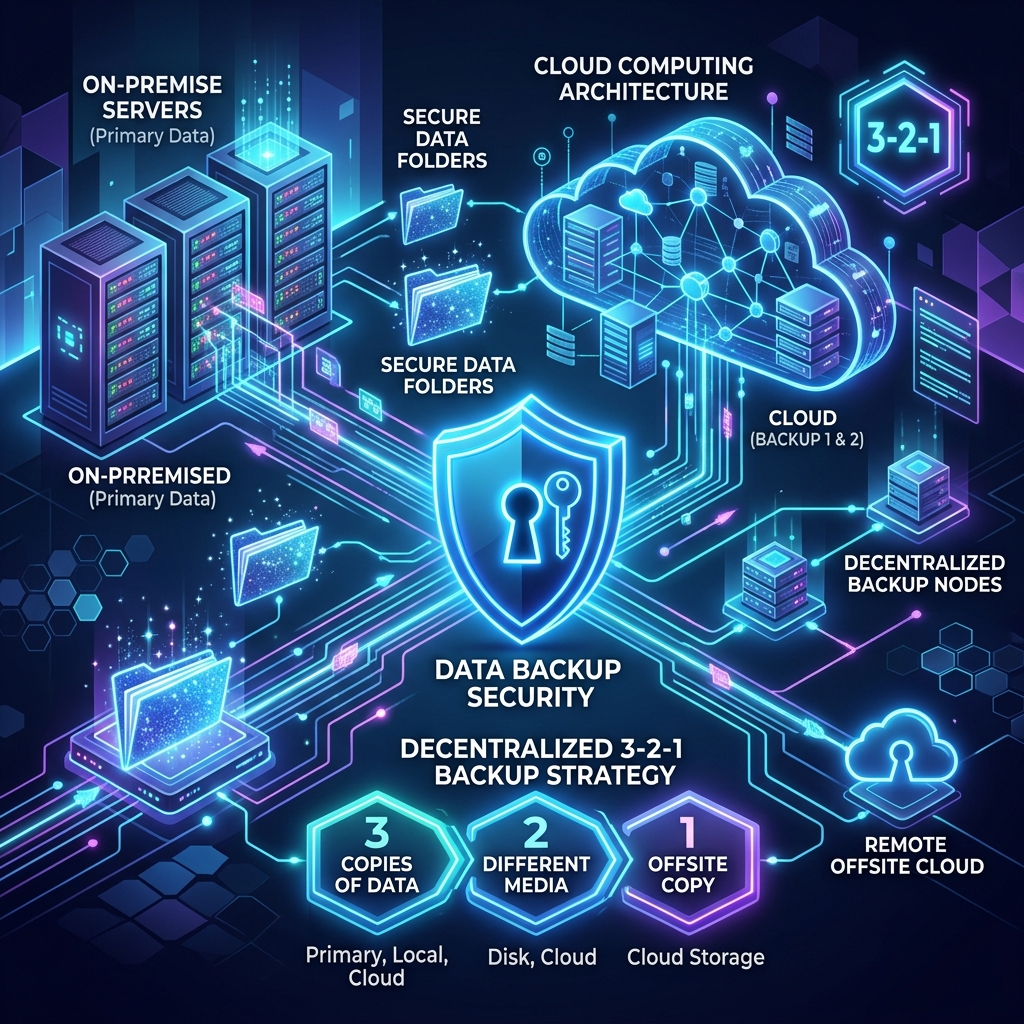
In the all-digital era, we accumulate thousands of important documents in file form: purchase invoices, insurance policies, pay slips, deeds of sale. While digitization simplifies our lives, it introduces a new risk: the permanent loss of our data in the event of hardware failure, theft, or a major incident (fire, flood). To protect your digital heritage, IT security experts agree on an essential standard method: the 3-2-1 backup rule.
What is the 3-2-1 backup rule?
This simple and rigorous method is based on three complementary principles to eliminate any single point of failure:
- 3 copies of your data: Keep one original file and at least two backup copies. If one copy is lost, you still have two on hand.
- 2 different media: Store your backups on two distinct physical media types (for example, your computer's hard drive and an external hard drive or USB key). This protects you from hardware failures specific to one technology.
- 1 offsite copy (decentralized): Keep at least one backup in a different geographic location from your home. In the event of a physical disaster at home (fire, burglary, water damage), your local copies will be destroyed or stolen, but your offsite copy will remain intact.
Perché i cloud commerciali comuni non sono sufficienti
Per la copia esterna, la tentazione è forte di utilizzare servizi cloud gratuiti come Dropbox o Google Drive. Tuttavia, questi servizi non garantiscono la crittografia privata dei tuoi documenti personali. I file vengono archiviati in uno stato leggibile sui server dei fornitori, il che pone un grave problema di privacy per le fatture e i documenti d'identità.
SafeInventa's implementation of the 3-2-1 rule
SafeInventa was designed from the beginning to respect and automate this golden rule without any complexity for the user. When you import a purchase invoice or a photo of your goods onto SafeInventa, your data is encrypted locally (first copy) then sent to our servers. To ensure maximum system resilience, we perform an automatic, decentralized daily backup of your encrypted data on multiple distinct servers located in different geographic areas in Europe. If a datacenter suffers a complete failure, your proofs remain intact and accessible.