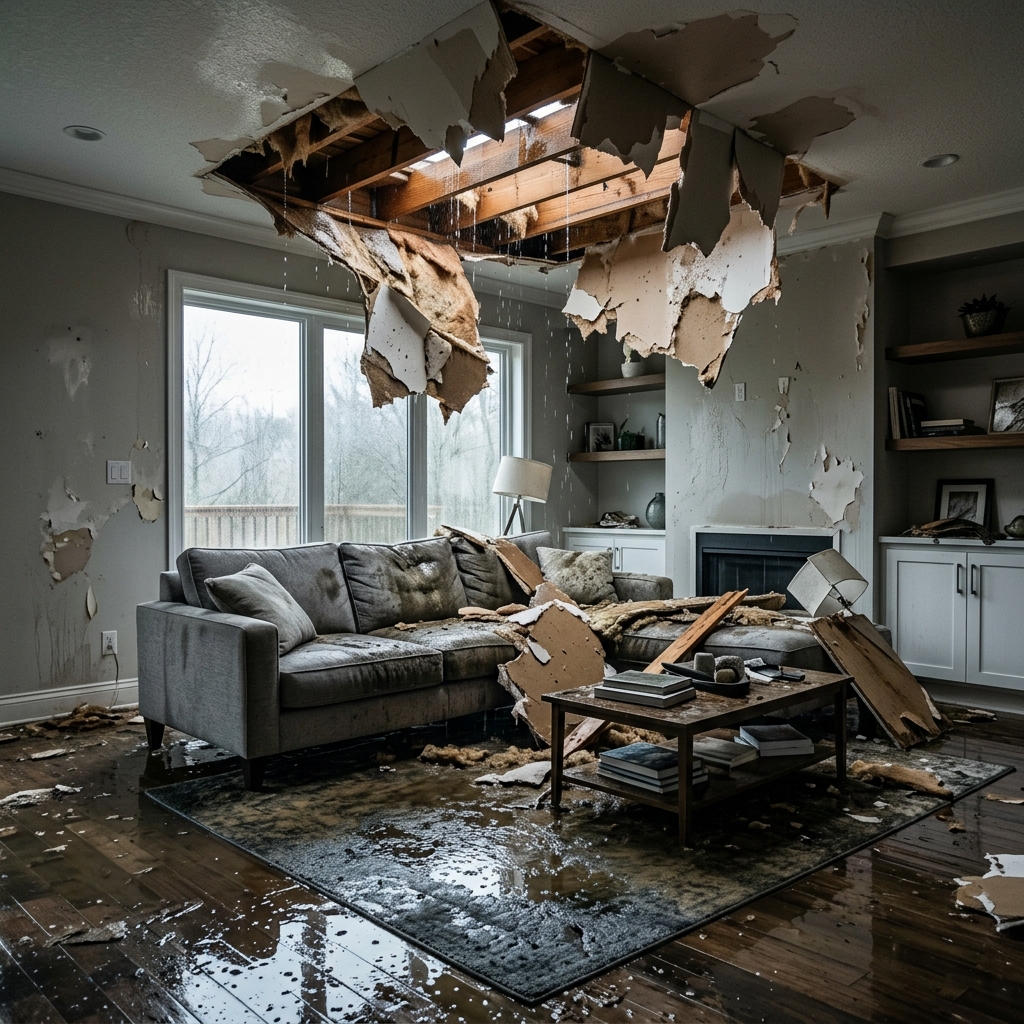
Water damage is by far the most frequent claim, with millions of declarations filed annually with insurers. Whether it comes from a broken pipe, a defective washing machine, a roof leak, or the neighbor upstairs, water seeps everywhere and causes insidious damage. While the management of leak detection and structural damage (walls, floors) is often well established, the compensation for movable property is frequently the subject of disputes and underestimations.
The first 24 hours: Critical emergency actions
When water damage occurs, panic often takes over. Yet, every minute counts to limit the extent of the damage. Here is the absolute priority order:
- Secure people and the premises: Immediately shut off the main water supply to your home to stop the bleeding. Also turn off the electricity at the circuit breaker in the flooded areas to avoid any deadly risk of electrocution or short-circuit causing a fire.
- Identify and stop the leak: If the water comes from the neighbor upstairs or the common areas, alert them without delay (or notify the building manager/caretaker).
- Salvage of goods (Legal obligation): Mop up as much as possible. Elevate your solid wood furniture, unplug and dry your electrical appliances. Be aware that insurance companies require you to "take all necessary measures to limit the damage." If you let the water stagnate without doing anything, you could be accused of having aggravated the claim.
- Immediate documentation: Even before you start cleaning or massively moving objects, take dozens of photos and videos from all angles. Water dries, and mold only appears later. The expert will need to see the extent of the flood at time T.
The 48 hours: The administrative labyrinth
Once the emergency is contained, the clock is ticking for the official declaration.
- Declaration to the insurance: You have 5 working days to make your claim declaration. Prefer a phone call followed by written confirmation.
- The Amicable Report: If the leak involves a third party (the neighbor, the condominium), jointly fill out an Amicable Water Damage Report. It is an essential standard document that considerably speeds up management between insurance companies.
- Drying and ventilation: Ventilate the room as much as possible to prevent the rapid development of fungi and mold that would irreversibly destroy your belongings.
"Warning: Do not throw away ANY damaged items (even moldy rugs or burnt-out appliances) before the expert's visit! Store them in a corner or a cellar. If you throw them away, you will no longer be able to prove their existence or their condition."
The trap of depreciation of movable property
This is where things get complicated. A laptop that has bathed in 2 centimeters of water is often unrecoverable. Particleboard furniture will swell and fall apart a few days later. To obtain the replacement or reimbursement of these objects, the expert will ask for your invoices.
However, water has a nasty tendency to destroy... papers. The invoices stored in the bottom drawer of the desk are lost. This is where the solution of a digital safe makes perfect sense. By using an end-to-end encrypted cloud solution like SafeInventa to scan your receipts and photograph your equipment, you protect yourself from this vicious circle.
The SafeInventa advantage for the claim
During the expert's visit, instead of digging through damp or illegible papers, you will be able to provide them with a PDF export generated by SafeInventa. This structured file will clearly present:
- The photograph of the property before the disaster (proving its excellent state of maintenance).
- The legible and secure scanned invoice.
- The initial purchase value, serving as a basis for calculation for the expert's compensation.
Don't let a leaky pipe ruin your savings. Prepare your digital inventory today.